Proof of concept · Pilot phase with selected offices
Plan more. Search less.
Building law, office and project knowledge. In one place.
Architects shape our future, yet the knowledge it takes is scattered.
Piloti connects building law, project documents and office knowledge in one knowledge base.
Piloti
The clause in the code, the drawing from 2019, the condition from the authority. In one answer.
Architects shape our future, yet the knowledge it takes is scattered.
Piloti connects building law, project documents and office knowledge in one knowledge base.
The right knowledge for every planning task.
You design, Piloti supplies the context: the regulation that applies, the experience from your past projects and the conditions on your plot. The decision stays yours. How an answer comes about: How Piloti works →
≈ 30 s
measured typical response time
Fictional example
I want to open the stair core to the outside and reach the units through an insulated loggia façade. What does that mean for fire safety?
- Project
- Housing, Vienna 1030
- Building class
- GK 4
- Asked by
- Project lead
- OIB-RL 2Sec. 3.5 – FaçadesFire spread across the exterior wall, GK 4
- BO Wien§ 106 – Escape routesStairwell to the outside, second escape route
- ProjectEinreichplan_EG.pdfETICS 14 cm EPS, loggia across 2 storeys
For your ETICS (GK 4) you have three options:
- ALoggia in A2Not chosen: costlier material, the façade is split in two.
- BEPS > 10 cm with fire stopChosen: meets GK 4, the insulation thickness stays.
- CClarify with the authorityNot chosen: outcome open, the procedure is delayed.
- Add the fire stop on each storey in the façade section
- Attach the OIB-RL 2, Sec. 3.5 verification to the submission
- Carry the additional €4,200 into the cost estimate
Complete chain
≈ €4,200 into the cost estimate
You ask, the way you would ask a colleague.
I want to open the stair core to the outside and reach the units through an insulated loggia façade. What does that mean for fire safety?
- Project
- Housing, Vienna 1030
- Building class
- GK 4
- Asked by
- Project lead
Piloti finds the provisions that apply, in building law and in your drawings.
Piloti lays out the options and explains them. You choose.
For your ETICS (GK 4) you have three options:
Your choice becomes the next steps, right into the cost estimate.
- Add the fire stop on each storey in the façade section
- Attach the OIB-RL 2, Sec. 3.5 verification to the submission
- Carry the additional €4,200 into the cost estimate
Complete chain
≈ €4,200 into the cost estimate
Hand over work. Not just questions.
A reference book waits until you ask. Piloti takes on tasks: it researches drawings and regulations, files the report in the project, turns findings into open points and checks again when you want it to.
Fictional project · every step a shipped feature
Mon · You, in the chat
“Do the submission check for the Vienna 1030 housing scheme by Friday.”
One sentence is enough. It becomes a task, under your name and with your permissions.
Mon · Task running
Submission check · Housing 1030
Researching · 3 rounds · 9 documents
Reads the project’s drawings, permit and zoning plan and the regulations that apply. You keep asking in the same chat.
Mon · Report in the project
Submission review report
2 met · 1 open
- Escape routesmet
- Parking spacesmet
- Façade fire stopopen
Verdict first, then one row per requirement, with its citation. Filed under “Reports”.
Tue · Open point
Fire stop missing in the façade section
Clarify →
The finding becomes a task of its own. The project memory keeps it open until it is resolved.
Thu · Inbox
Review report for approval
ApproveRequest changes
The project lead approves or sends it back, and Piloti revises it from the reason given.
From now on · Schedule
“Check this every Monday.”
The check runs again every week, and the result comes to your inbox.
Deadlines, findings and approvals stay in the project, visible to the whole team. That is the difference between a tool that answers and one that works alongside you.
Every feature in the changelog →Sources you can check.
Responsibility for the design stays with you.
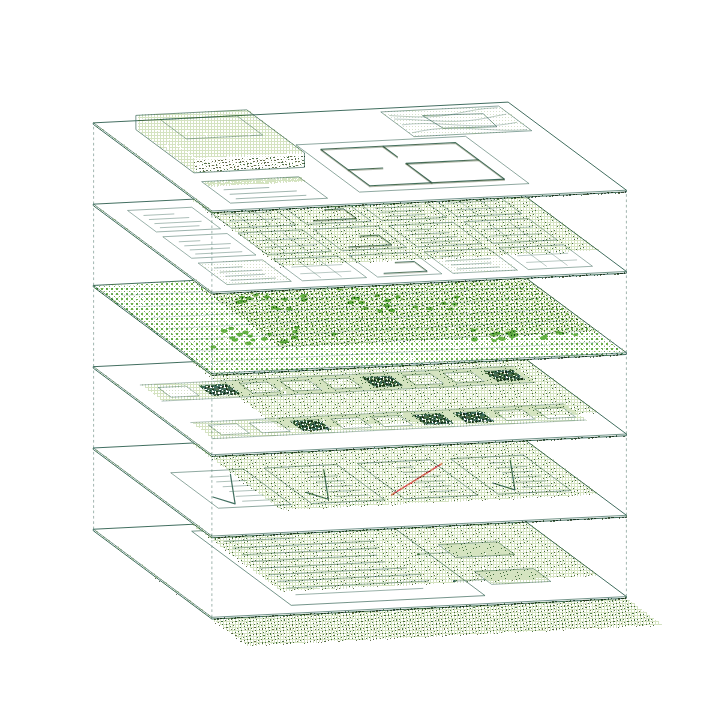
Regulations
State building codes, OIB guidelines, a register of standards
Your office
Plans, documents, experience from past projects
Your project
Site, plot, official requirements
Web research
Current sources, each backed by a link
With every answer
Reasoning – why the answer is what it is
Assumptions – what it rests on
Rules – which regulation applies
Source reference – clause, section, page
With your data
- We do not train models on your data.
- Plans and projects remain the property of your office.
- You download documents and answers one by one.
- Sign-in through WorkOS (USA). AI requests go through OpenRouter (USA) to model providers that may be based outside the EU.
- Details in the privacy policy
Piloti gets better every week.
601 changes in 7 weeks, each one in the changelog. The pilot offices help decide what comes next.
Week 40
- Chat answers can now lay out requirement checks, procedure steps, option comparisons and key figures as dedicated blocks, with each check row showing whether the value meets its limit.
- An answer's details now show how many credits it cost, and with your own provider key how many tokens.
- The Aufwand slider in the chat input marks its five levels on the track, and the handle glides to the level you pick.
Do the maths yourself.
We assume that around 30% of a planning week goes into searching, for codes, past projects and reference values, and that Piloti gives 40% of that back. Nobody has measured this yet. Put in your office and an example price and see what the assumption would be worth.
Our assumptions
- Work week
- 40 h
- Share spent searching
- 30%
- Of that, Piloti gives back
- 40%
per person, including 13th and 14th salaries, excluding employer on-costs
Annual value · example
≈ €42,000
net of the example price, across your whole office, if the assumptions hold
- Time recovered
- 2,112 h/year
- ≈ 1.2 full-time roles
- Pays for itself in
- 3.6 months
- Value per euro
- 3.3×
An example calculation from our assumptions, your numbers and an example price. Not an offer and not a promise. Every step is laid out in the full working →
Three founders, one aim: knowledge where the planning happens.
Architecture, software and sales at one table. We are building Piloti together with our pilot offices, on their real questions.

Jonathan Uhlemann
Architecture and product

Matthias Bigl
Software and AI

Ferdinand Rubenbauer
Business and sales
What offices ask us.
What is Piloti?
Piloti is an AI knowledge platform for architecture and planning firms. It answers planning questions from the building law in force and from your office and project documents, and names the sources for every answer. It also takes on work that takes longer than an answer: review reports and file notes in the project, open points and recurring checks. Piloti is a proof of concept, currently being trialled with a small number of pilot offices.
Why not just use ChatGPT?
ChatGPT answers questions. Piloti answers them in the context of your project: from the state building codes in RIS, the OIB guidelines, your drawings and your office’s archive, with a citation down to section, clause or page that is checked against the source text before it is shown. When a document is missing, such as the zoning plan, Piloti says so instead of answering as if it had read it.
Who is Piloti for?
For architecture and planning firms in Austria that spend their days checking building law, OIB guidelines, standards and project documents against each other, for example on fire safety, escape routes or energy efficiency.
Which sources does Piloti use?
The Austrian states’ building codes from the federal legal information system (RIS), the OIB guidelines, a register of the relevant standards, your office and project documents and, where needed, web research in which every source is linked.
How traceable are the answers?
With every answer Piloti shows the reasoning, the assumptions, the rule that applies and the source reference down to the section, clause or page, so you can check the answer against the original. Responsibility for the design stays with you, and Piloti is not legal advice.
Does Piloti train AI models on my data?
No. We do not train models on your data, and drawings and project documents remain the property of your office. You can download documents and answers individually.
Where is my data processed?
Sign-in runs through WorkOS, Inc. (USA). AI requests are routed through OpenRouter, Inc. (USA) to model providers that may be based outside the EU. The privacy policy lists which providers are involved.
What does Piloti cost?
There is no price list yet. During the pilot phase we agree terms with each pilot office individually. The value calculator on this page uses an example price, not an offer.
Who is behind Piloti?
Three founders in Vienna: Jonathan Uhlemann (Architecture and product), Matthias Bigl (Software and AI), Ferdinand Rubenbauer (Business and sales). Piloti is being founded; until it is registered, the three work together under a letter of intent.
How does my office become a pilot office?
Send a real planning question from a current project to mail@jonathanuhlemann.de. We will show you how Piloti answers it. We are building Piloti with a few offices that try it on real planning questions from their daily work and tell us honestly what is missing.
Read on, by question.
- Piloti compared10 pagesWhy Piloti is the better choice for planning questions in Austria, next to the tools offices compare today. Details on other vendors come from their own websites, with the month we read them.
- What offices use Piloti for10 pagesPiloti brings its own ways of working for the most common planning questions. Each says what it checks, what it needs and where it stops.
- Who Piloti is built for3 pagesAnyone planning in Austria checks building law, drawings and experience against each other every day. What Piloti takes on, office by office.
- Building law in Austria’s nine states9 pagesIn Austria, building law is state law. Piloti works with the building code and building-technology rules of the state your project is in.
- Glossary: terms from building law10 pagesThe terms most requirements in Austrian building law hinge on, with the definition from the source and what they mean in practice.
Bring us a real question.
Send us a planning question from a current project, with the documents if you like. We will show you how Piloti answers it, with sources you check against the original. If it fits, you plan with us as a pilot office: early access, a direct line to us founders and a say in what we build next.
- 01
You send a question
A real one from your project, with the location and building type. Documents if you like.
- 02
We show you the answer
In a call, with your documents and the sources Piloti draws on.
- 03
You plan with Piloti
As a pilot office, on questions from your working day, and you tell us what is missing.